 Following a series of high profile scandals, confidence and trust in the UK’s charity sector recently hit an all time low. You might think that would be a wake up call to the sector but at Cancer Research UK the intention appears to be one of deliberately further undermining that public trust and confidence.
Over the last few years there has been a series of scandals among high profile charities, scandals which have left the British public wondering which, if any, charities they can trust with their hard earned money.
From the collapse of Kids Company to food for sex scandals involving Oxfam, Save The Children, the Red Cross and more, to sexual harassment at the Presidents Club, and to wallet busting executive pay packages; barely a month goes by without another charity bringing the ethics of the whole sector into question.
Surely the wise charity would ensure that ethics and integrity were set to high standards and are well managed given this environment? Surely honesty and transparency would be vital? And what of habits of lying by omission, misrepresenting facts, and sheer bare-faced hypocrisy?
You would think so but, as Race 4 Truth has evidenced time and time again, at Cancer Research UK all of these acts are normal practice, part of the culture of the organisation.
And in not addressing that very poor culture, Cancer Research UK risk not only undermining confidence in themselves, but of further eroding public trust and confidence in the whole sector.
The public should be able to expect the very highest ethics, morals and integrity from charities; to be able to trust that the organisations they entrust with their money can be trusted and believed.
If charities like Cancer Research UK cannot get their house in order to provide this then the Charities Commission and government should be playing a far more proactive role in setting (high) standards and ensuring those (high) standards are complied with.
If they do not then the damage to the sector could spread far wider than solely those charities, like Cancer research UK, who display such poor ethics and low integrity, and end up damaging the innocent along with the guilty.
In the Race 4 Truth, Cancer Research UK are lagging behind.
 Imagine creating a groundbreaking new fundraising event, one which goes on to raise over £1/2 Billion for the charity you shared it with and which changed the fundraising landscape in the UK for good, creating a type of event which has raised many times more than that for hundreds of charities.
 The National Council for Voluntary Organisations (NCVO) has been developing a set of principles that can act as a ‘code of ethics’ for the charity sector and is now consulting on a draft code.
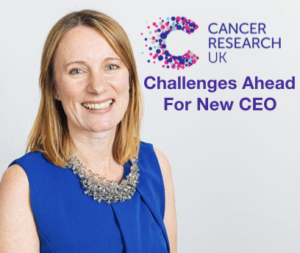 When Cancer Research UK’s new Chief Executive, Michelle Mitchell, takes up her post later this summer, she will face many of the same challenges facing all CEO’s, whether in the corporate or charity sector. Where is the organisation going? How will it maintain or increase growth? What will the broader economy mean to fundraising? And more, including understanding and improving public perceptions of the charity.
 Hypocrisy? Absolutely. For although the charity and its leadership refuse to recognise Jim Cowan, they have been more than happy over the years to
 The Race 4 Truth
  They Tweeted using Father’s Day as a marketing tool and calling on people to honour fathers affected by cancer while (still) ignoring Jim Cowan and denying him recognition for creating the event and in full knowledge of the fact that the inspiration behind Jim’s creating of the Race for Life was his own father’s cancer diagnosis in 1993. Hypocrisy?
 C
C And what of their Chairman, Professor Sir Leszek Borysiewicz, who was knighted in 2001 in recognition of his work. Where does he stand on recognising Jim Cowan for the creation of an event his charity has gained so much through? He refuses to recognise Jim at all. No, it is fine for others to recognise him but not for him to recognise Jim. Hypocrisy?
 The charity’s new Chief Executive Officer will be starting work soon. Michelle Mitchell already has an OBE so we know she is willing to accept recognition for her achievements. We can only hope that, unlike those who preceded her, she is not a hypocrite and will be keen to ensure recognition to all who merit it both within the organisation and without.